Top 10 Best Food Production Companies Transforming the Industry Today
In today's rapidly evolving culinary landscape,
food production companies play a pivotal role in shaping how we grow, process, and consume our food.
From innovative agricultural practices to cutting-edge food technology, these companies are at the forefront of transforming the industry for the better.
As the global population continues to surge and food security concerns mount,
the significance of these companies cannot be overstated.

In this article, we will explore the top 10 best food production companies that are leading the charge in revolutionizing food production processes.
These companies are not just about mass production; they are focused on
sustainability, efficiency, and quality.
By embracing new technologies and practices, they are addressing the challenges of food waste, environmental impact, and nutritional value,
all while keeping pace with consumer demands.
Join us as we delve into the influential world of food production companies that are redefining our relationship with food
and paving the way for a more sustainable future.
Leading Innovations: How Top Food Production Companies Are Shaping Sustainable Practices

As the global food industry increasingly prioritizes sustainability, leading food production companies are at the forefront of driving innovative practices that minimize environmental impact. These companies are adopting regenerative agriculture techniques, implementing digital solutions, and enhancing hygiene management to meet the challenges posed by climate change and rising food demand. In 2025, we are set to witness a significant evolution in agriculture, with technologies like AI and IoT playing critical roles in creating efficient, sustainable food production processes.
Tips for adopting sustainable practices in your operations involve the integration of innovative technologies. Firstly, consider implementing precision agriculture techniques that allow for more efficient use of resources. This not only optimizes yield but also reduces waste. Secondly, establish partnerships with tech companies that specialize in sustainability solutions, as collaborative efforts can lead to groundbreaking advancements. Finally, stay updated on industry trends by attending sustainability conferences, where industry leaders share insights and strategies for effective change.
As they explore these dynamic approaches, companies can enhance their reputation and gain a competitive edge. Emphasizing transparency in supply chains and incorporating eco-friendly materials into packaging not only fosters customer loyalty but also contributes meaningfully to environmental preservation. Furthermore, continuous education on sustainable practices within teams can spark innovation, ultimately leading to a more sustainable future for the food production industry.
The Rise of Automation: Transforming Efficiency in Food Production Industries
The food production industry is witnessing a remarkable transformation driven by automation technologies that enhance efficiency and streamline operations. As companies seek to meet the growing demand for quality products, advancements in automation have become crucial. For instance, the market for fruit and vegetable sorting equipment is projected to reach $465.39 million in 2024, and soar to $662.05 million by 2032, highlighting a growth rate of 4.3%. This exponential growth indicates a strong pivot towards automated solutions that improve throughput while reducing labor costs.
In addition, recent developments such as significant investments in warehouse robots underscore the industry's shift towards smart logistics. The merging of expertise in horticultural automation, as seen with recent strategic partnerships, further emphasizes the commitment to innovation. By embracing these technological advancements, food production companies are not only increasing operational efficiency but also adapting to the evolving consumer preferences for diverse and high-quality food products. This focus on integrating automation is reshaping the landscape of food production, laying the groundwork for sustainable practices and heightened productivity across the sector.
Consumer Demand and Health Trends: Driving Change in Food Production Companies
The food production industry is currently experiencing a profound transformation driven by shifting consumer demands and evolving health trends. Modern consumers are increasingly prioritizing sustainability, nutrition, and transparency in their food choices. Consequently, companies are adapting their production processes to meet these expectations, embracing plant-based options, eco-friendly packaging, and ethical sourcing practices.
To keep pace with these changes, food production companies should consider a few essential tips. Firstly, investing in research and development can help them innovate new products that cater to health-conscious consumers, such as low-calorie, high-nutrient alternatives. Secondly, leveraging technology to enhance supply chain transparency can strengthen consumer trust, showcasing commitments to ethical sourcing and environmentally sustainable practices. Finally, companies should actively engage with their customer base through social media and feedback mechanisms to better understand their preferences and stay ahead of industry trends.
As health-focused trends continue to dominate, food production companies that successfully align their operations with consumer expectations will not only thrive but also contribute positively to public health and environmental sustainability.
Investing in Technology: Key Players Revolutionizing Food Supply Chains
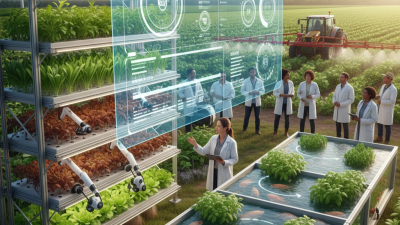
The food production industry is undergoing a significant transformation driven by technological advancements. Key players are investing heavily in innovative solutions that enhance food supply chains, ensuring efficiency and sustainability. Companies are adopting automation, artificial intelligence, and blockchain technology to streamline processes from farm to table. These innovations not only improve productivity but also provide greater transparency, allowing consumers to make informed choices about their food sources.
In addition to improving operational efficiency, technology is helping companies address pressing challenges such as food waste and environmental impact. Smart farming techniques, enabled by IoT devices and data analytics, allow producers to optimize resource use and reduce waste. Furthermore, advancements in supply chain logistics, such as real-time tracking systems, ensure that products are delivered fresher and with minimal loss. As these key players continue to lead the charge, the food industry is evolving into a more resilient and sustainable ecosystem, capable of meeting the demands of a growing global population.
Top 10 Best Food Production Companies Transforming the Industry Today
Global Impact: The Role of Top Food Companies in Addressing Food Security Challenges
Global food security is a pressing challenge, and leading food production companies are increasingly recognized for their vital role in addressing this issue. By integrating food security into their sustainability strategies, these companies can drive significant improvements in global food systems. Initiatives supported by businesses not only focus on improving supply chains and production methods but also consider the needs of vulnerable populations, including smallholder farmers and women, who play a crucial role in food cultivation. Collaboration between corporations and international donors is essential to create innovative solutions that enhance food accessibility and sustainability.
Furthermore, the need for sustainable practices in food production has never been more urgent. As unsustainable practices contribute to environmental degradation and climate change, corporations are called to take on a dual responsibility: to produce food in eco-friendly ways while ensuring food security for all. The use of technology, such as artificial intelligence, offers promising avenues for optimizing production and distribution processes to combat food insecurity. By leveraging data, companies can make informed decisions that not only benefit their bottom line but also contribute to global efforts in enhancing food security and resilience in the face of growing challenges.